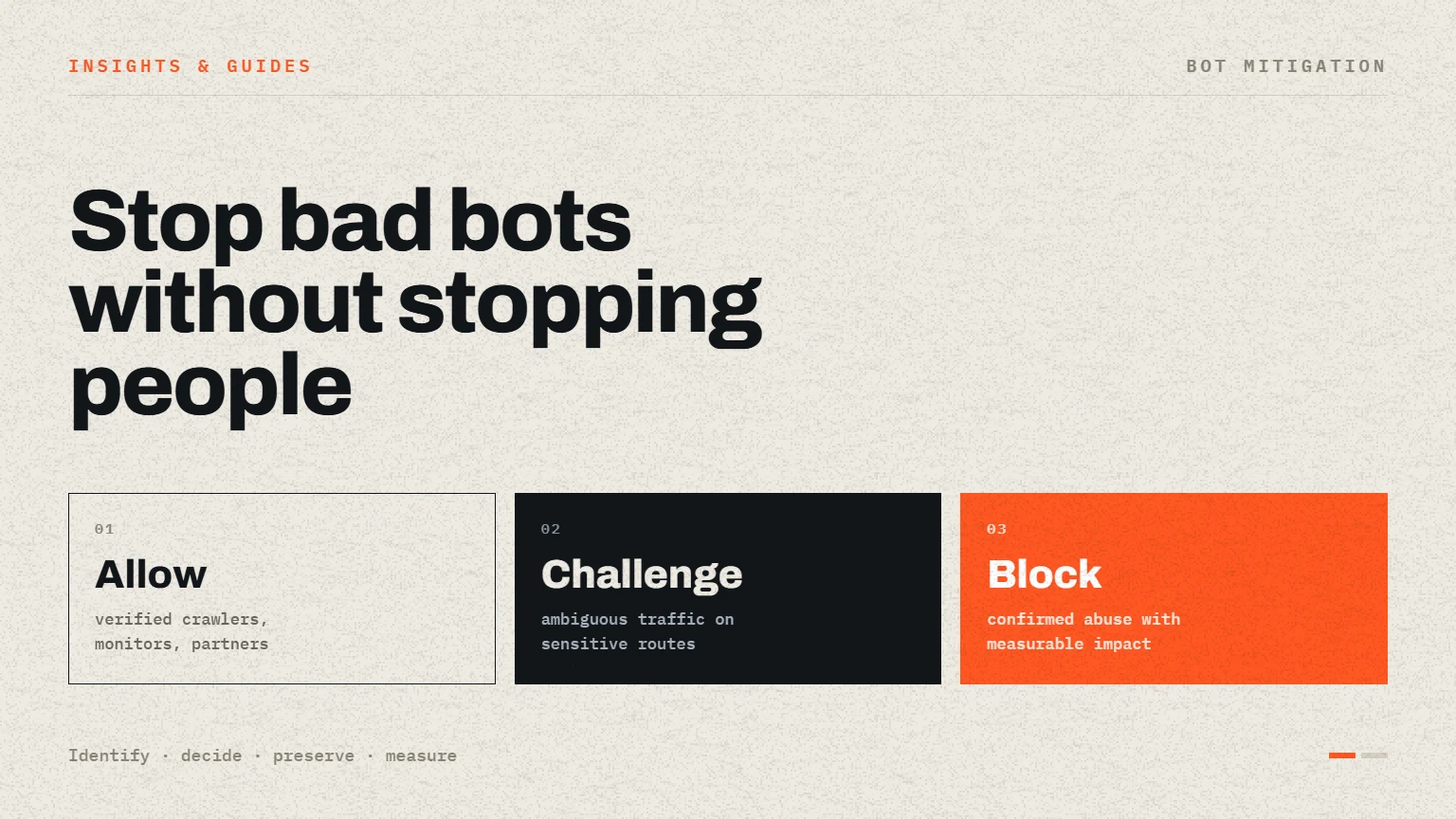
Anti-bot protection begins with a practical question: which automated requests are acceptable for this action, and which create harm? Answering it requires more than labeling traffic as human or bot. A useful control combines request and network evidence with route-specific policy, applies a proportionate response, and leaves enough context for a team to review the result.
Why the terminology is inconsistent
There is no single universal product definition for anti-bot. One service may use the label for a user-agent rule, another for behavioral detection, and another for a complete managed platform. Search queries also use anti-bot, anti bot, and antibot to mean roughly the same category. Evaluate the actual inputs, decisions, and controls rather than relying on the label.
OWASP uses a vendor-neutral taxonomy for automated threats because the harmful behavior is often misuse of valid web functionality. That framing matters: the objective is not to eliminate automation. It is to reduce unwanted outcomes such as credential stuffing, scraping, carding, denial of inventory, scalping, skewing, and automated vulnerability scanning.
Build anti-bot protection from four capabilities
An anti-bot control observes one or more request signals and produces evidence about automated activity or risk. Depending on the implementation, those signals can include network classification, user-agent analysis, request headers, URL and parameter context, reputation, frequency, browser behavior, or customer-defined allow and deny lists.
- Detection identifies characteristics associated with automation or known abuse.
- Classification describes the apparent traffic type, confidence, or reason.
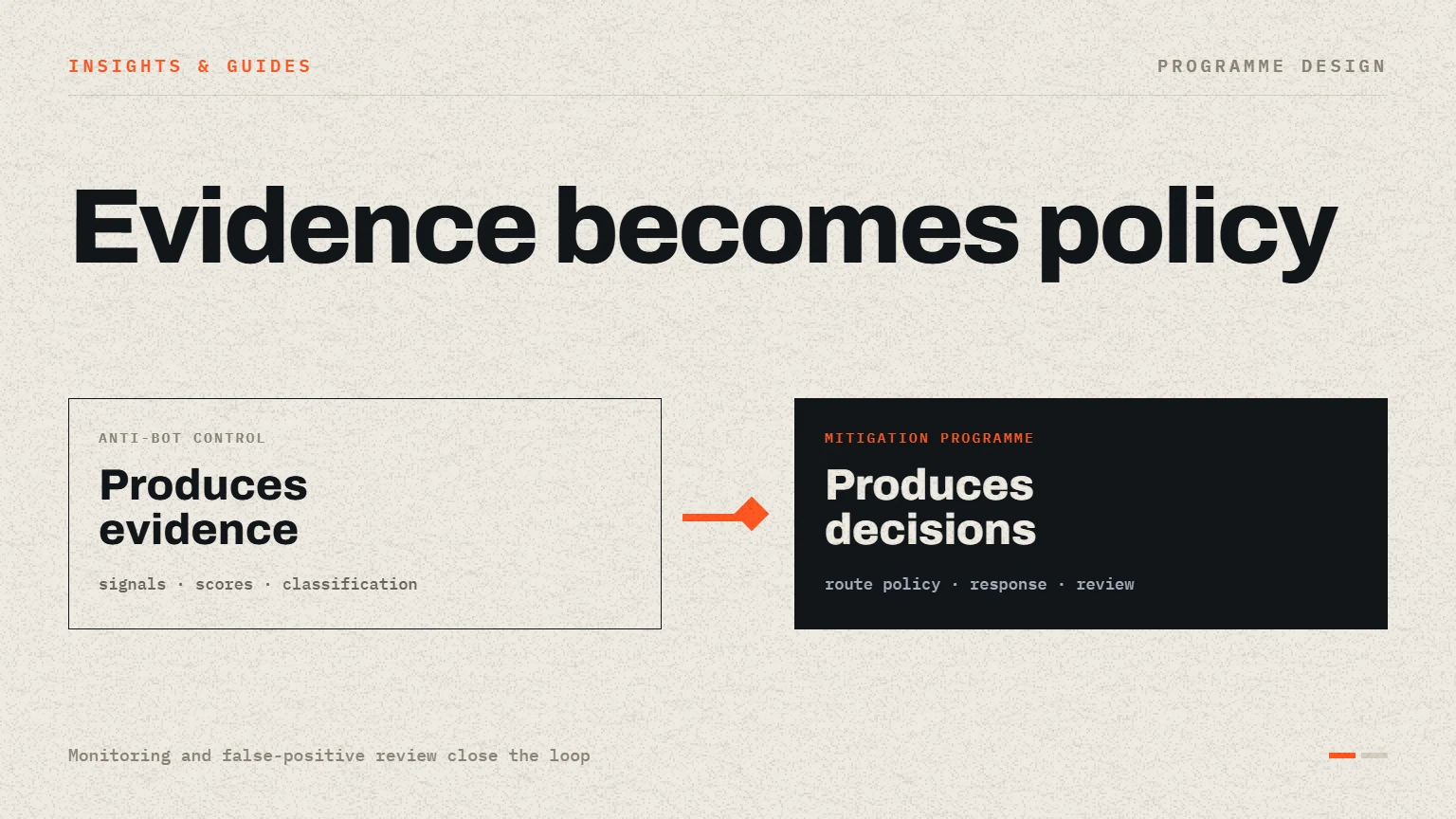
- Policy combines that evidence with the protected route and business rules.
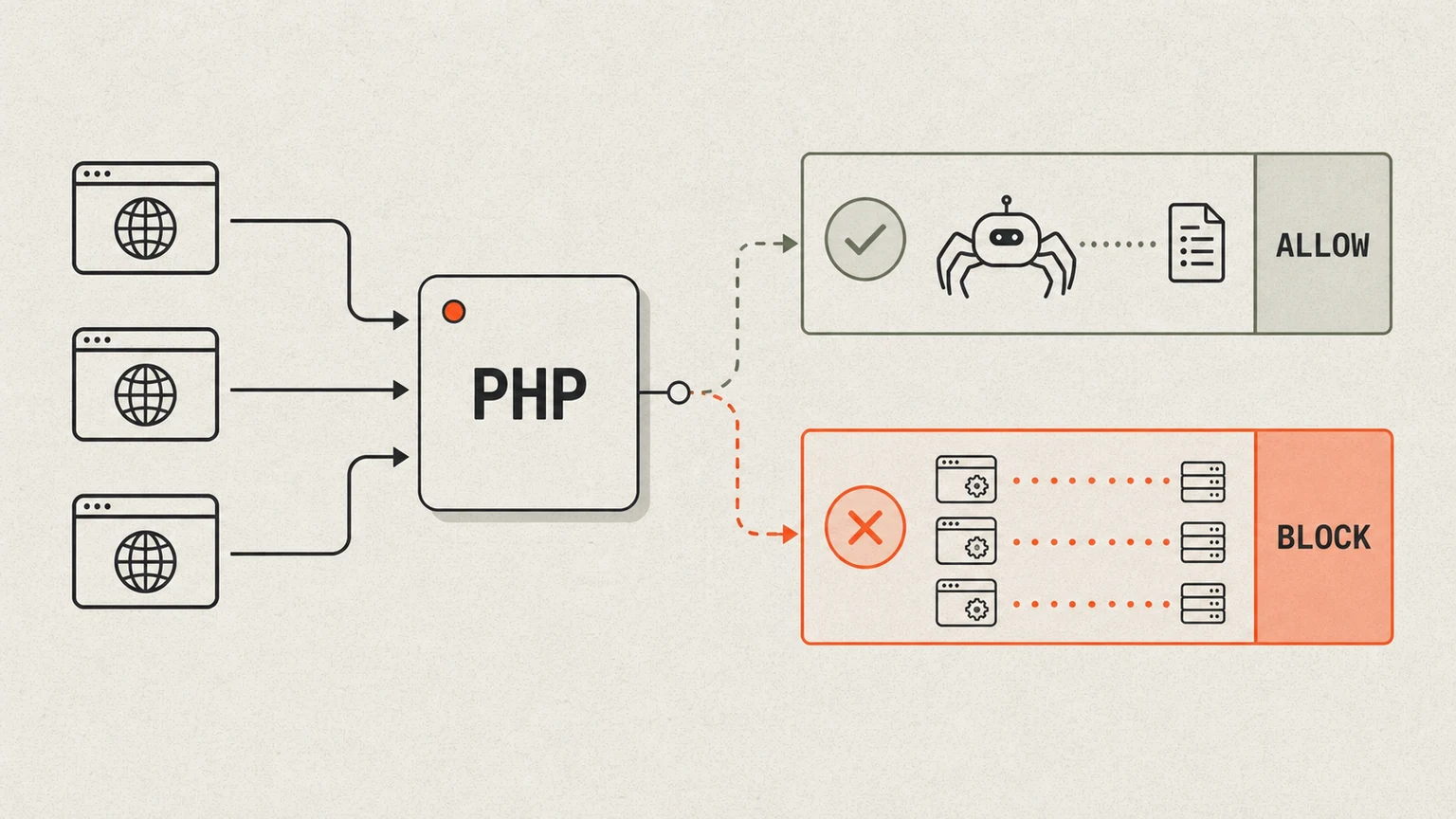
- Enforcement turns the policy result into allow, monitor, challenge, throttle, redirect, or deny behavior.
Turn detection into an operating program
Deployment does not end when detection is enabled. Teams must define protected actions, legitimate automation, evidence thresholds, fallback behavior, response ownership, logs, and false-positive review. This operating layer is commonly described as bot mitigation: the continuing work of tuning and coordinating controls around anti-bot detection.
- Threat modeling: identify the action and harmful outcome.
- Telemetry: collect server-observed and client-provided signals.
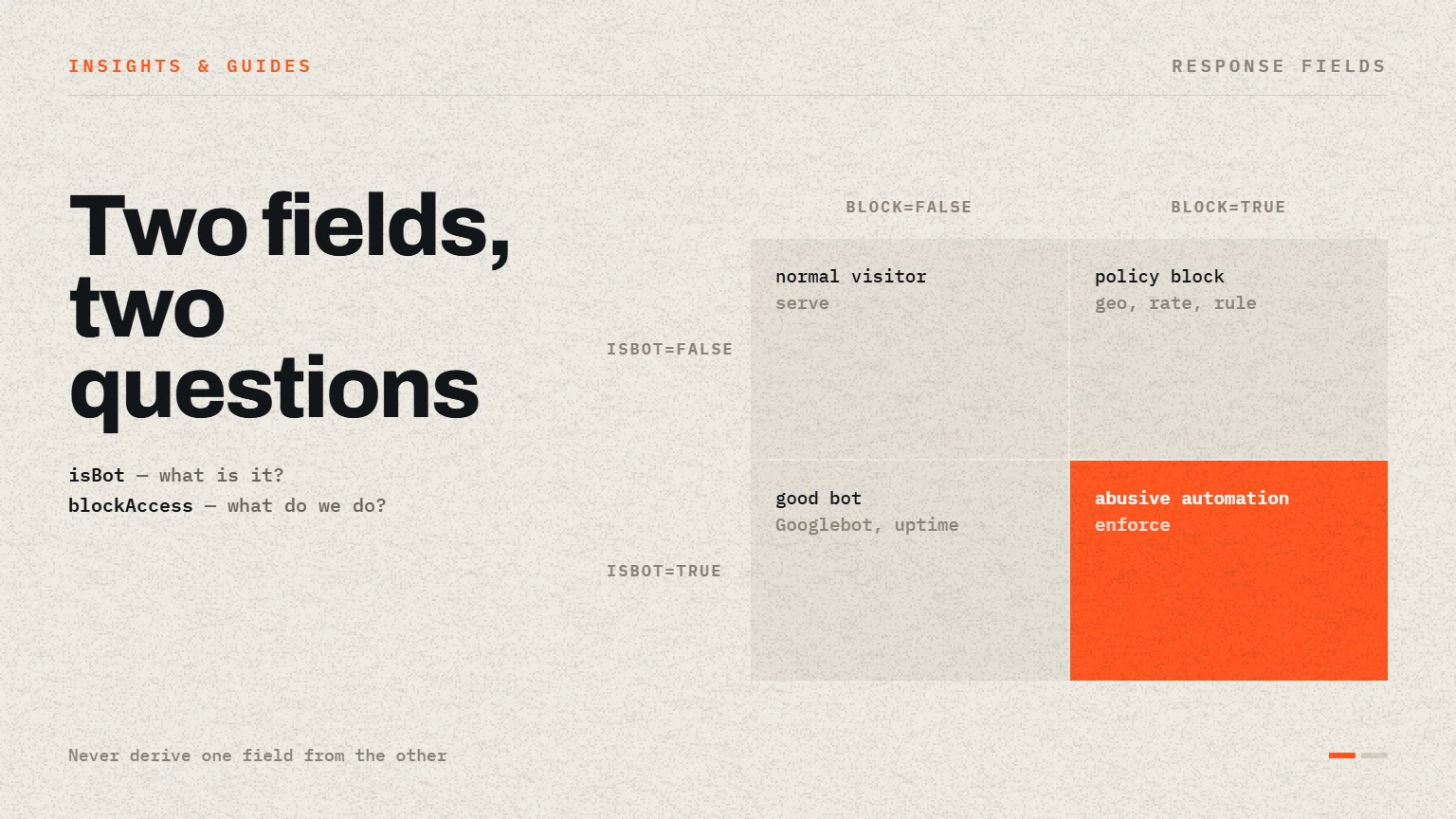
- Decisioning: separate bot classification from application access policy.
- Response: choose an action appropriate to confidence and risk.
- Operations: monitor, tune, investigate, expire temporary blocks, and document changes.
Use CAPTCHA as a selective challenge
A CAPTCHA is one possible challenge, not a complete anti-bot strategy. It can add friction, may be bypassed, and is not appropriate for every request. A mature policy uses challenges selectively when uncertainty and business risk justify them, while high-confidence allow and deny decisions avoid unnecessary interruption.
Combine anti-bot evidence with a web application firewall
A web application firewall primarily evaluates web requests against security and protocol rules. Automated abuse can use normal application behavior and valid requests, so it may not resemble an exploit. Anti-bot evidence can complement a firewall, but neither control should be assumed to replace authentication security, authorization, validation, or business-logic safeguards.
Use Stopbot as an application decision input
Stopbot provides bot detection, network and visitor context, customer-configured traffic decisions, and reasons that an integration can use at the application boundary. Blocker and Blocker V2 expose classification and final decision fields separately. Your application remains responsible for checking API success, applying the configured response safely, protecting secrets, and combining traffic decisions with controls such as rate limiting and multi-factor authentication where appropriate.
Questions to ask before choosing an anti-bot service
- Can it distinguish classification from the final access decision?
- Can policies vary by domain, route, campaign, or protected action?
- How are legitimate crawlers and trusted integrations verified and allowed?
- Which network, request, reputation, and behavior signals are available?
- Can the response explain why a request was allowed or denied?
- How are false positives reviewed and temporary mitigations removed?
- What happens when the decision service is unavailable or returns invalid data?
- Can the team measure blocked, allowed, and total activity without exposing sensitive request data?
Sources
Continue building
Put the decision fields into practice.
Review the current API documentation before changing production traffic handling.